
Understanding Desk Strain: Why Neck and Low Back Tension Recur
Prolonged seated posture doesn't just shorten muscles—it creates fascial adhesion and dampens vagal tone. Dr. Blake Dennis explains how craniosacral holds and myofascial release restore true movement.
Why desk strain can persist
Hours at a desk can create a familiar pattern: the head moves forward, the chest narrows, and the low back works harder to stabilize the body. Over time, the nervous system may begin to treat this holding pattern as normal, even after the workday ends.
Working with the whole pattern
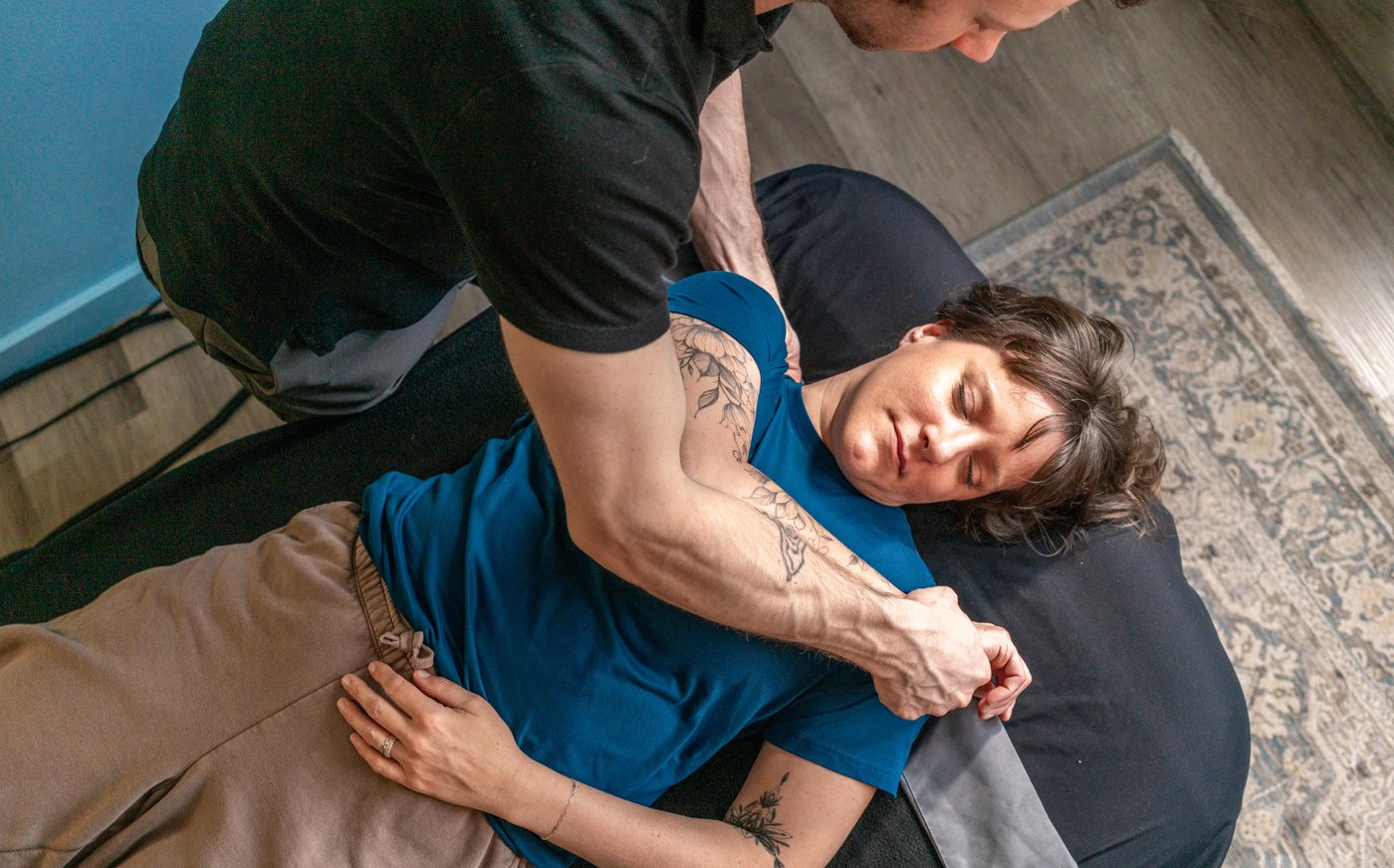
At Origins, we look beyond the spot that hurts. Somatic bodywork can combine gentle myofascial release, craniosacral holds, and postural awareness to help the body sense more options for movement. The goal is not to force a correction, but to make ease and adaptability available again.
Small changes that support recovery
Brief movement breaks, a supported screen height, comfortable breathing, and noticing when the jaw or shoulders begin to brace can all help. When recurring tension is paired with headaches, numbness, weakness, or significant pain, a thorough clinical evaluation is an important next step.
Want personalized support?
Bring your questions to a free 15-minute discovery consultation with Dr. Dennis in Ballard, Seattle.